
It is the peak of summer 2026. The weather is gorgeous, the grill is fired up, and the FIFA World Cup is absolutely dominating every conversation. You want to host an epic watch party for your friends and family, but let’s be honest: nobody wants to be stuffed inside a dark, stuffy living room when the summer evenings are this perfect. The smell of barbecue is in the air, and the backyard is calling.
The obvious answer is to move the party outside. But when you start looking up professional outdoor projector screens online, the sticker shock is incredibly real. Commercial inflatable screens can cost hundreds of dollars, take an eternity to inflate with noisy air pumps, and act like giant, uncontrollable sails the second a mild breeze hits your yard. Retractable metal-frame screens? They are even more expensive, heavy, and often incredibly frustrating to assemble.
Welcome back to your creative corner at JoyCrafted, where we firmly believe that "handmade" doesn’t have to mean "headache." You absolutely do not need a massive budget or a degree in engineering to bring the stadium atmosphere directly to your lawn.
In this comprehensive guide, we are going to show you exactly how to build a high-quality, wrinkle-free DIY outdoor projector screen in just 30 minutes. Whether you are hosting a massive neighborhood World Cup watch party or a cozy, intimate movie night under the stars, this clever home hack will transform your backyard into the ultimate outdoor entertainment zone without breaking the bank.
1. The "No-Headache" Approach: Why Build Your Own Outdoor Screen?
Before we run to the hardware store to gather our materials, let's talk about why taking the DIY route isn't just a budget-friendly fallback option—it is actually the superior choice for backyard entertainment.
Saving Money Without Sacrificing the Experience
Let's break down the basic math of outdoor theater setups. A decent mid-range outdoor screen from a big box retail store will easily set you back anywhere from $150 to $400. And remember, that hefty price tag is just for the screen, not the projector, the speakers, or the snacks!
By choosing the JoyCrafted DIY method, your total materials cost will hover around the $30 to $50 mark. That is a massive saving. By cutting out the retail markup, you can immediately reinvest those saved dollars into what really matters for your party: upgrading your snack table with premium appetizers, buying a better set of Bluetooth patio speakers, or even upgrading to a brighter, higher-definition projector.
More importantly, our specific DIY method uses smart tension techniques to ensure the picture quality is just as crisp, sharp, and flat as a commercial screen. You are not sacrificing pixel clarity or dealing with a floppy, distorted image; you are simply using clever life hacks to get a premium result for a fraction of the cost.
Customizable Size for Any Backyard
One of the biggest frustrations with store-bought screens is that they come in rigid, predetermined sizes—usually 100 or 120 inches. But what if your outdoor space doesn't fit the mold? What if you have a narrow urban patio, a small apartment balcony, or a uniquely shaped garden? Or conversely, what if you have a massive open lawn and want a colossal 150-inch cinematic experience that you can't even find in stores?
Building it yourself means you become the architect of your own entertainment space. If you only have a tight 6-foot gap between your wooden deck and your garden fence, you simply measure and cut your frame to fit exactly 6 feet. If you want to hang your screen directly from your wooden pergola or suspend it between two large oak trees, you can design it to fit those precise dimensions perfectly.
This bespoke, custom-fit approach ensures that your screen looks like a natural, intentional part of your outdoor space decor, rather than a bulky, awkward add-on that blocks your walkways or overwhelms your patio furniture. It is your yard, your screen, and your rules!

2. Gathering Your DIY Screen Supplies (Budget-Friendly List)
The secret to a successful, headache-free DIY project lies entirely in the preparation. You can find almost everything you need for this build at your local hardware store, a fabric shop, or right online. Let’s break down the ultimate shopping list for your custom backyard theater.
The Screen Fabric: Bedsheets vs. Blackout Cloth
When people first think of a DIY outdoor screen, their immediate instinct is to grab a spare white bedsheet from the linen closet. While a bedsheet is basically free and works in an absolute emergency, it is highly flawed for a proper watch party. Bedsheets are thin; they let the projector’s light bleed right through the fabric, resulting in a washed-out, dull image. Plus, the slightest breeze makes them ripple, warping the picture and making the players on the field look like they are swimming!
The JoyCrafted Upgrade: For a truly professional, crisp, and bright cinematic image, you want to use White Blackout Cloth (the material used to line heavy curtains) or raw Matte White Projector Fabric. This material is completely opaque, meaning 100% of the projector's light bounces back to your eyes, giving you vibrant colors and deep contrasts, even if the sun hasn't fully set yet. It is also heavier, which prevents the wind from blowing it around.
The Frame Materials (PVC Pipes vs. The Rope Method)
How you hang your screen depends entirely on the layout of your yard.
The Rope Method: If you have a wooden pergola, two perfectly spaced trees, or sturdy fence posts, you can skip building a frame altogether. Simply install heavy-duty screw hooks into the wood, run a strong paracord or rope across, and suspend your screen directly from it.
The PVC Pipe Frame: For a completely freestanding, portable screen that you can place anywhere on your lawn, PVC pipes are your best friend. PVC is incredibly lightweight, surprisingly sturdy, dirt cheap, and fits together like adult Lego blocks. For a standard 100-inch to 120-inch screen, you will need:
- Four to six lengths of 1-inch to 1.5-inch PVC pipe (thicker pipes are better for larger screens to prevent bowing in the middle).
- Two 90-degree elbow joints (for the top corners).
- Four T-joints (to connect the base and the bottom corners).
- Four end caps (to seal the feet of your stand).
The Essential Tension Tools
The absolute golden rule of projector screens is tension. A screen with wrinkles or sags will ruin the viewing experience. To stretch your blackout cloth tight across your PVC frame, you have two highly effective options:
- Heavy-Duty Spring Clamps: This is the fastest, no-sew, no-drill method. You simply wrap the fabric over the PVC pipe and snap a strong clamp over it to hold it securely in place.
- Ball Bungee Cords and Grommets: If you want a more permanent, professional look, you can install metal grommets (eyelets) around the border of your fabric and use elastic ball bungee cords to strap the screen to the PVC frame.


3. Step-by-Step Guide: Build Your PVC Projector Screen in 30 Minutes
You have your materials, your World Cup snacks are prepping in the kitchen, and kickoff is approaching. Set a timer for 30 minutes, because that is all the time you need to put this together!
Step 1: Cutting and Assembling the PVC Frame (10 Minutes)
The beauty of a PVC frame is that it is completely modular. Crucial JoyCrafted Tip: Do not use PVC glue! By leaving the pipes unglued, you can easily disassemble the entire frame at the end of the night and slide it under a bed or into a closet for easy winter storage.
- Measure and Cut: Determine the height and width of your screen. If you don't have a hacksaw at home, simply ask the employees at your local hardware store to cut the PVC pipes to your exact measurements before you leave the store! You will need two long pipes for the width, two pipes for the height, and four shorter pieces (about 2 feet each) to build the feet of the stand.
- Build the Base: Take two T-joints and insert your short 2-foot pieces into the sides. Cap the ends. These are your two stable "feet."
- Construct the Rectangle: Connect your vertical height pipes into the top of those T-joints. Attach your 90-degree elbow joints to the top corners, and connect them with your top width pipe. Add the final bottom width pipe using two more T-joints just above the feet. You now have a giant, free-standing picture frame!
Step 2: Preparing and Attaching the Screen Fabric (10 Minutes)
With your frame standing proudly on your lawn, it is time to add the magic.
- The Clean Setup: Lay a clean tarp or blanket on the grass and spread your blackout fabric flat. This prevents grass stains or dirt from getting on your pristine white screen.
- The Wrap and Clamp Method: If you are using the fast clamp method, stand your frame up. Have a friend help you drape the top edge of the fabric over the top PVC pipe. Pull it smoothly and attach a spring clamp every 10 to 12 inches to secure it.
- The Bungee Method: If you installed grommets, simply hold the fabric inside the frame, loop a ball bungee through the corner grommet, wrap it around the PVC pipe, and hook the elastic over the plastic ball. Start with the four corners first.
Step 3: Creating Tension for a Wrinkle-Free Picture (10 Minutes)
This final step separates the amateurs from the DIY pros.
- Stretch it Out: Once the top is secure (or the four corners are bungeed), move to the bottom pipe. Pull the fabric down firmly—tighter than you think you need to—and clamp or bungee it. The fabric should feel almost like a drumhead.
- Secure the Sides: Move to the left and right sides, pulling outward and securing with clamps or bungees every foot. As you apply tension all the way around, you will see every single wrinkle magically disappear, leaving a flawlessly flat surface.
- Wind-Proofing: Even a gentle summer evening breeze can knock over a lightweight PVC frame. To keep your World Cup broadcast stable, place heavy sandbags, dumbbells, or decorative garden rocks over the base "feet" of your frame. Alternatively, you can use basic camping tent stakes and paracord to tie the top corners down to the lawn.
And just like that, the hard work is done! In less time than a single half of a football match, you have built a massive, high-quality cinematic screen in your own backyard.
4. The Tech Setup: Projectors, Audio, and Streaming Hacks
Your screen is built, tensioned, and looking spectacular. But a screen is just a blank canvas until you bring the technology outside. The good news is that you don't need a dedicated home theater room to get incredible sound and vision.
Choosing the Right Budget-Friendly Projector
The projector is the engine of your outdoor watch party. A few years ago, you had to spend thousands to get a decent picture outdoors. Today, compact, highly capable LED projectors are incredibly affordable and perfect for occasional backyard use.
What to look for when buying an outdoor projector:
- Lumens (Brightness): This is the most critical spec. If you plan to start watching the game while the sun is still setting (dusk), you need a projector with a high lumen count (look for 5000+ LED lumens or 500+ ANSI lumens). If it's pitch black outside, you can get away with a cheaper, lower-lumen model.
- Native Resolution: Ensure the projector has a native resolution of at least 1080p. Many cheap projectors claim to "support 1080p" but only output 720p, resulting in a blurry football.
- Keystone Correction: This crucial feature allows you to adjust the image if your projector is sitting on an uneven patio table, ensuring your screen isn't tilted or distorted.
DIY Outdoor Surround Sound Hacks
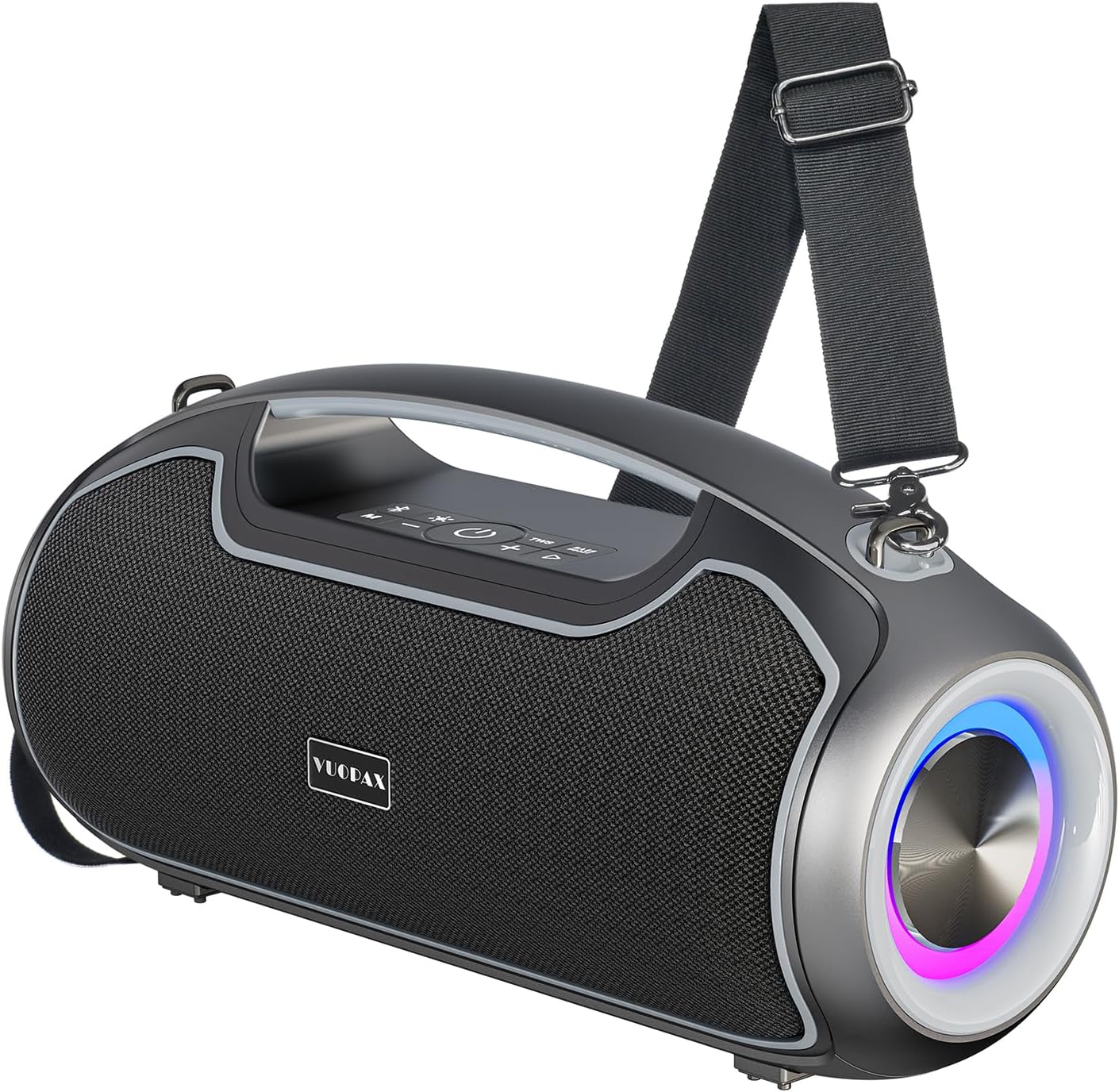
The internal speakers on most portable projectors are, frankly, terrible. They are tiny and completely drown out when faced with the open air of a backyard. To feel the roar of the stadium, you need external audio.
Instead of running complicated stereo wires across your lawn, leverage the tech you probably already own. Most modern projectors have Bluetooth capability or a standard 3.5mm headphone jack.
The JoyCrafted Audio Hack: Take your portable, waterproof Bluetooth party speakers (the ones you take to the beach or use in the kitchen) and place them strategically around your seating area—not behind the screen! Placing one speaker near the screen for dialogue and commentary, and another behind the seating area creates a fantastic, budget-friendly surround sound experience.

Weatherproofing & Cable Management
Safety first! When mixing electricity and the outdoors, you must be proactive.
- Keep it Dry: Even on a clear summer night, dew will settle on the grass. Elevate your extension cord connections off the ground by placing them inside a plastic Tupperware container with slots cut for the wires.
- Tape it Down: Nothing ruins a party faster than someone tripping over the projector power cord, bringing the whole operation crashing down. Use brightly colored gaffer tape (which doesn't leave sticky residue) to tape down any cables crossing walkways.

5. Setting the Scene: Comfort, Lighting, and Vibe
This is where the JoyCrafted magic really shines. You aren't just putting a TV outside; you are creating an unforgettable, immersive environment. The decor and comfort level will dictate how long your guests want to stay after the final whistle blows.
Cozy Seating: Pallets, Floor Cushions, and Blankets
Ditch the stiff plastic patio chairs. For a truly luxurious outdoor theater, layer your seating.
- The Front Row (The Lounge Zone): Lay down heavy outdoor rugs or thick picnic blankets directly on the grass. Pile them high with oversized floor cushions, bean bags, and soft throws. This is perfect for the kids or the die-hard fans who want to be right up near the action.
- The Stadium Seating (The Back Row): If you have wooden pallets lying around, stack them two high, cover them with a foam mattress topper or thick blankets, and instantly create raised "stadium seating" behind the lounge zone so everyone has a clear view of the screen.
Glare-Free Ambient Lighting
You need light so your guests can find the snack table (and the bathroom) without tripping, but you absolutely cannot have bright overhead lights washing out the projector screen.
The solution is low-level ambient lighting. String waterproof fairy lights or Edison-style bistro bulbs along your fences, low in the trees, or even wrapped around the legs of your DIY PVC frame. This creates a warm, magical, and inviting atmosphere while keeping the immediate area around the screen dark.

Natural DIY Bug Repellents
There is one uninvited guest that can ruin any summer backyard party: the mosquito. Since you will be sitting outside for over two hours, you must protect your "fan zone."
Skip the harsh chemical sprays. Instead, create a beautiful, natural barrier.
- Citronella Mason Jars: Fill mason jars with water, slice some fresh lemons and limes, add a few sprigs of fresh rosemary, and top it with a floating citronella candle. Place these around the perimeter of your seating area. They look incredibly chic and smell amazing while keeping the bugs away.
- The Fan Trick: Mosquitoes are notoriously weak flyers. Place a simple box fan or oscillating pedestal fan behind your seating area, blowing a gentle breeze over the guests. The airflow completely prevents mosquitoes from landing!
The Final Whistle
There you have it—a complete, spectacular backyard watch party setup, built with your own two hands, for a fraction of the cost of commercial equipment.
By building your own tensioned PVC frame and sourcing the right blackout fabric, you guarantee a flawless picture quality that rivals any indoor living room. Combined with some clever seating hacks, ambient lighting, and budget-friendly tech upgrades, your backyard is officially the VIP section for the 2026 World Cup.
The beauty of this JoyCrafted project is its versatility. Once the tournament is over, this screen doesn't go to waste. It becomes the centerpiece for autumn neighborhood movie nights, Halloween spooky screenings, or even a massive screen for playing video games under the stars.
Now it is your turn to host! What is the very first match (or movie) you are going to project on your brand new DIY outdoor screen? Let us know in the comments below!
If you build this setup, we absolutely want to see it! Snap a photo of your backyard theater, pin this tutorial to your DIY Pinterest boards, and tag @JoyCrafted on Instagram so we can share your incredible creations! Enjoy the game!